
The fourth quarter ends with both basketball teams level at 98:98. The referee signals for overtime, the game continues, and the final score becomes 110:105. If you placed a bet before the game, which score should count?
The answer depends on the exact market you selected and its settlement rules. A full-game winner market might include overtime, while a regulation-only selection may already be settled when the fourth quarter ends. A first-half or quarter selection usually refers to an even shorter period.
For adults searching for basketball overtime betting settlement Nigeria information, the important thing is to read the market label and the operator's published rules before deciding whether a ticket was settled correctly.
What Is Overtime in Basketball?
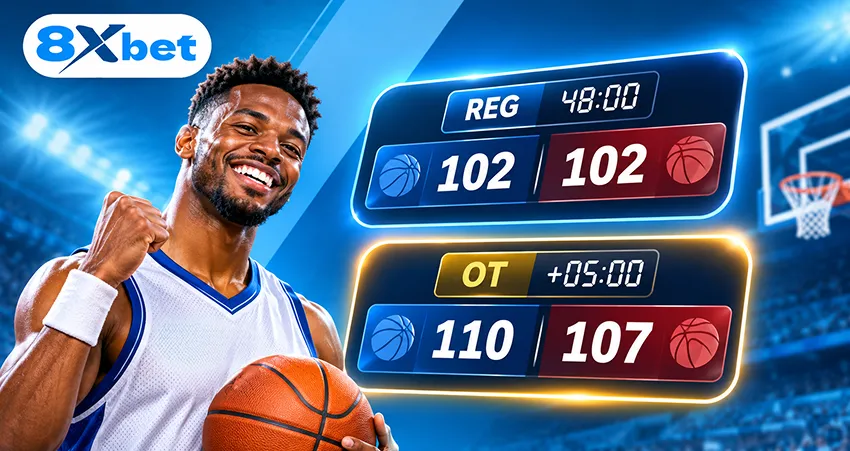
Overtime is an additional playing period used when a basketball game is tied at the end of regulation. Regulation is the scheduled main playing time, normally divided into four quarters.
In the NBA, regulation consists of four 12-minute quarters, and an overtime period lasts five minutes. Under FIBA rules, regulation uses four 10-minute quarters, with five-minute overtime periods when needed. Competition rules can differ, so the match format matters.
If the score is still level after one overtime period, another may follow until the competition's rules produce a winner. Points scored during those extra minutes become part of the final game score.
That sporting fact, however, does not mean every betting market must include those points. A market can define its own settlement period.
Full-Game Moneyline and Totals
A moneyline selection concerns which team wins the game. A total selection concerns whether the combined score is above or below a specified number.
The crucial question is whether the offered market defines full game as including overtime or limits it to regulation.
Many basketball full-game markets are settled using the final score after overtime, where applicable. But you should not assume that convention applies to every bookmaker, competition or market.
Some offerings use a regulation-only definition or display an explicit overtime condition. Check the published rules and the exact selection label.
For example, a fictional Over 210.5 total would lose if only 196 regulation points counted, but win if the applicable market included a 215-point final score after overtime.
This example explains how the settlement period changes the calculation. It does not represent a current 8xbet line, offered price or guaranteed result.
Regulation-Only or Three-Way Markets
Some basketball markets expressly cover regulation time only. A three-way regulation result can offer Home, Draw and Away outcomes for the score at the end of the fourth quarter.
Here, a draw is possible as a betting result even though the actual game continues to produce a winner.
If a fictional match is tied 98–98 after regulation, a regulation-draw selection would normally be the winning outcome under that stated market definition.
A regulation-home-win selection would not become a winner simply because the home side eventually wins in overtime.
Quarter and First-Half Betting

Quarter bets and first-half bets focus on a defined section of the game.
A first-quarter winner usually depends on the score in Q1. A first-half total normally concerns the points scored across Q1 and Q2. A fourth-quarter market generally concerns Q4 rather than the full match.
This matters because a late comeback or overtime can change the final score without changing what happened in the earlier period. If a team wins Q1 by 27–24 but loses the game, a first-quarter winner selection is still assessed against Q1, subject to the market rules.
Three Score Examples
The following examples use fictional teams, Blue City and Orange Town, and hypothetical markets. They are not live fixtures or quoted 8xbet odds.
For each example, assume the market rules explicitly say what period counts.
Example 1: Tied after regulation, different final winner
Blue City and Orange Town are level at 98:98 after Q4. Blue City wins 110–105 after overtime. A full-game winner selection that includes overtime would settle on Blue City. A regulation-only three-way market would settle on the draw instead. The same game produces different valid results because the selected periods differ.
Example 2: Total points cross a line in overtime
The score is 98:98 after regulation, giving 196 combined points. After overtime it is 110:105, giving 215 points.
Consider a fictional Over 210.5 selection. If the market includes overtime, the final 215 would be above the line. If the market covers regulation only, 196 would be below it. The total is calculated from the score within the period named in the market.
Example 3: An early quarter result stays separate
Suppose Blue City wins the first quarter 26:22, but Orange Town later forces overtime and wins the game 104:101.
A hypothetical Q1 Blue City winner selection would normally be assessed from the 26:22 quarter score. A full-game winner market including overtime would instead use Orange Town's final win. Those are separate questions, not conflicting settlements.
Common Errors When Reviewing Settlement
Here are some of the common basketball reviewing-settlement errors:
Confusing the regulation buzzer with the final buzzer
The fourth-quarter buzzer ends regulation. When the scores are tied, the game may continue. Note both the regulation score and the final score before reviewing a ticket.
Selecting a regulation-only market by accident
A label such as “regular time” can change the result that counts. Review the accepted bet slip rather than relying on what you remember seeing while browsing.
Ignoring postponed or abandoned-game rules
A delayed, suspended or abandoned game may have its own time limits, completion requirements and void rules. The operator's published terms determine whether a bet stands, waits or is void. Do not infer settlement from a partial scoreboard.
Mistaking a void for a loss or a win
A void selection commonly returns the original stake, but the conditions for voiding differ by market. In a multiple-selection ticket, a void leg may also affect the combined calculation. Check the ticket history and rules.
Raising a dispute without the market details
If the result seems wrong, record the accepted market name, event, selection, timestamp, score at the relevant period and any rule reference. Then contact official support with those details. The final score alone may not explain the settlement.
Checklist Before Placing or Reviewing a Bet
Use this short checklist to understand the selection rather than predict a result:
- Competition: Check which league or tournament rules govern the game.
- Market label: Is it full-game winner, regulation result, first-half total or a specific quarter?
- Settlement period: Does the selection cover regulation only or the final score?
- Overtime: Does the published market rule expressly include or exclude extra periods?
- Stake and limits: Check your chosen amount, any applicable limit and the accepted ticket details.
- Rule reference: Keep the official market terms available if you later need to review settlement.
You can visit 8xbet for the published information. The examples above describe possible market conventions, not a statement that those exact markets are offered on the site.
Responsible Participation
Basketball games can turn quickly, and overtime adds another period of uncertainty. Knowing the settlement rules helps you understand a ticket, but it does not make a wager certain or remove the possibility of losing your stake.
Betting is for adults aged 18 and over, subject to applicable law. Decide on an entertainment budget before participating, keep essential spending separate and never borrow money to place a bet.
Avoid increasing a stake to recover a loss. No overtime pattern, betting system or score example can guarantee a winning outcome.
The simplest rule to remember is this: do not settle a basketball ticket in your head from the final scoreboard alone. First identify the competition, the accepted market and the exact period that counts.
← Back to all articles